The Importance of Proper Surface Preparation when Restoring Concrete Structures
Mar 02 2026Concrete restoration projects often focus on the visible repair, filling cracks, applying new mortar, and adding protective coatings. What is less visible, but far more critical, is the condition of the surface before those repairs even begin. Proper surface preparation plays a direct role in how long a repair lasts and how well it performs under load, weather, and daily use.
In practice, many repair failures can be traced back to inadequate preparation rather than the repair material itself.
Why does surface preparation matter?
Concrete deteriorates for many reasons. Water ingress, corrosion of reinforcement, freeze and thaw cycles, and heavy traffic all contribute. When damaged concrete is removed, the exposed surface must provide a clean and stable base for new material.
If loose fragments, dust, or weakened concrete remain, the new repair mortar cannot bond properly. The result may look sound initially, but over time it can de-bond, crack, or allow water to penetrate again.
Effective surface prep ensures that only sound concrete remains and that the surface texture is suitable for strong mechanical bonding.
How is the surface prepared?
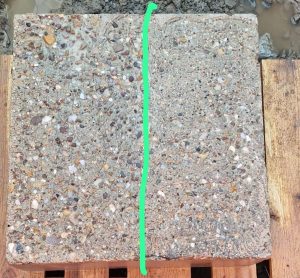
Several techniques are used to prepare concrete. One traditional approach is concrete scabbling, which uses mechanical tools to break away damaged layers. This method can be effective, particularly for removing thick coatings or roughening large areas.
However, concrete scabbling introduces vibration and impact into the structure. In some situations, especially when working on bridges or sensitive infrastructure, this can cause micro cracking in surrounding areas. It can also generate significant dust, which requires careful management.
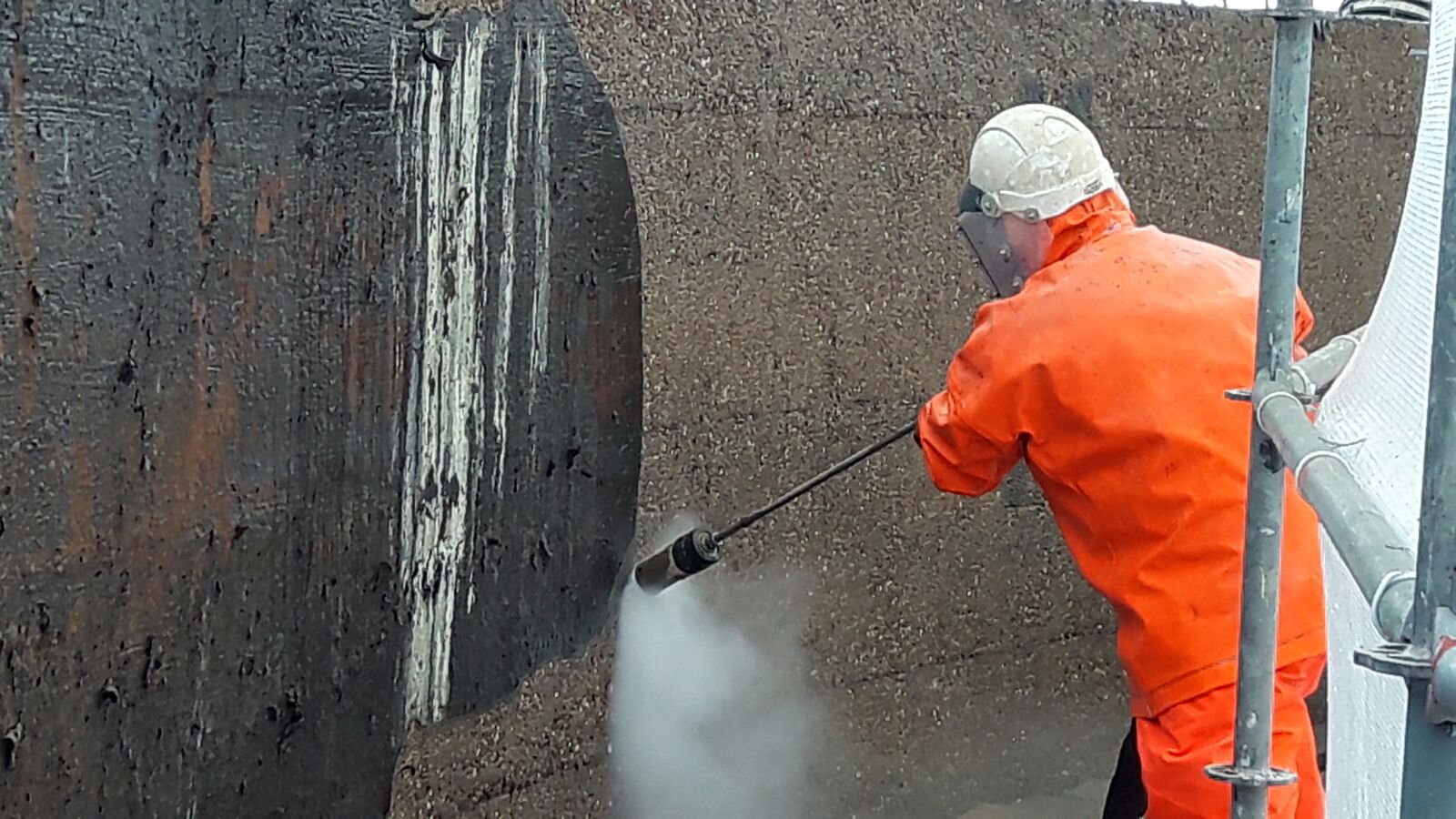
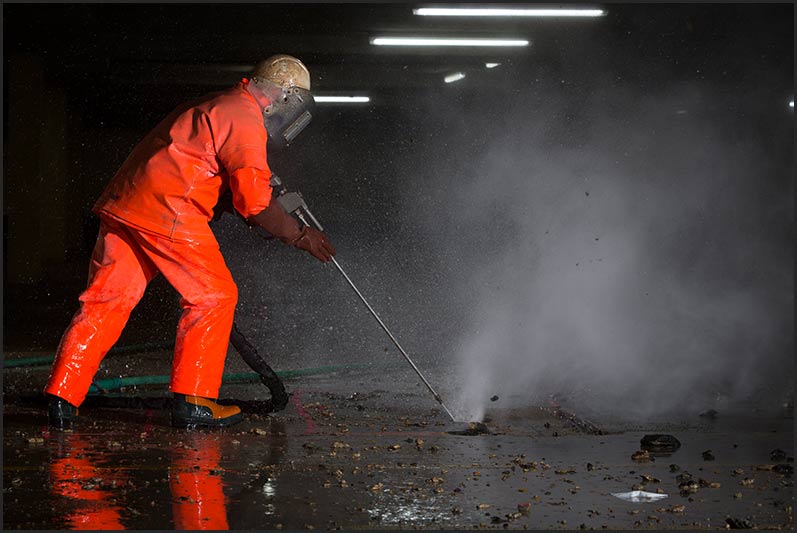
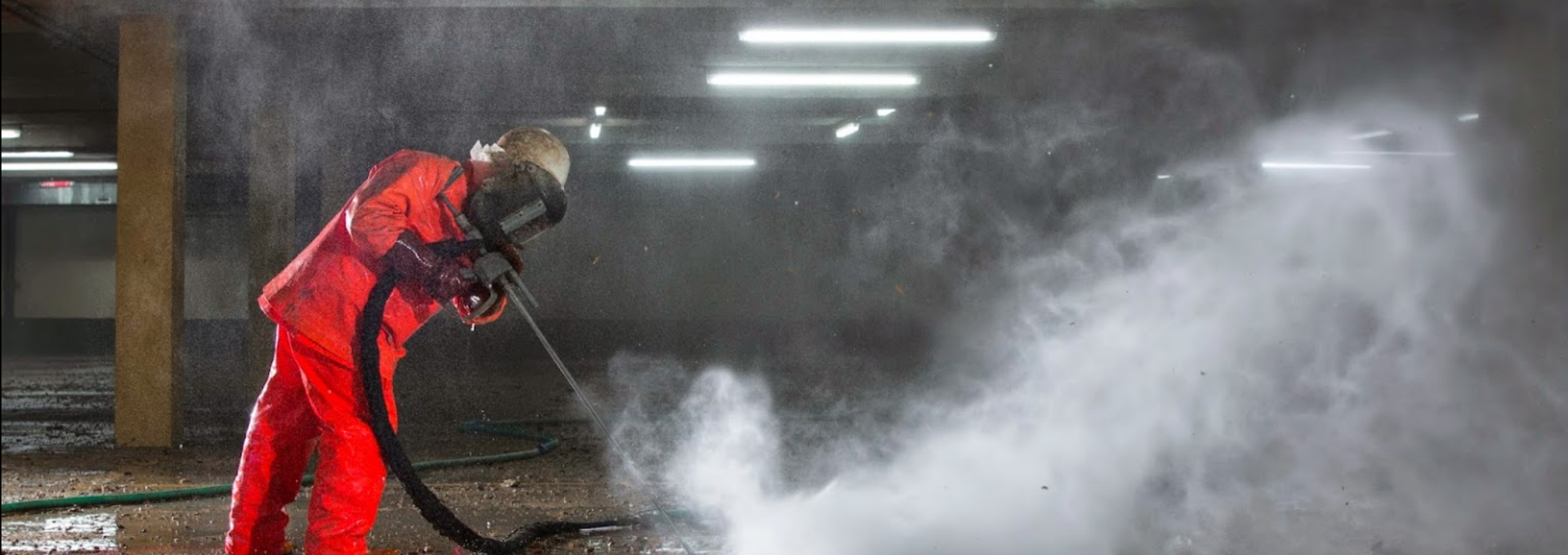
Ultra-high pressure water jetting offers an alternative that avoids impact damage. It removes deteriorated concrete by following natural weaknesses in the material. Sound concrete remains intact while compromised sections are cleared away.
Both approaches have their place. The key is in selecting the method that best suits the structure and the repair specification.
How is the right surface profile achieved?
A successful repair requires more than simply removing damaged areas, as the exposed surface must also have the correct texture. Too smooth, and the new material may not grip effectively. Too rough, and it may be difficult to achieve full contact.
Proper surface prep creates a profile that allows repair materials to lock into place. This improves adhesion and reduces the likelihood of early failure. In practical terms, this means fewer call backs and more predictable performance.
Water jetting often produces a clean, textured finish without leaving dust or debris behind. Mechanical methods may require additional cleaning to remove loose particles before repairs begin.
How does water jetting impact steel reinforcements?
When restoring concrete structures, exposed steel reinforcement must be treated carefully. Corrosion products need to be removed so that protective coatings and repair mortars can adhere correctly.
Traditional mechanical preparation can sometimes damage reinforcement or create additional stress points. Controlled methods reduce this risk while still achieving the required level of cleanliness.
This step is particularly important in structures exposed to moisture or de-icing salts, where corrosion is a recurring issue.
Can surface prep extend the lifespan of a repair?
Proper water jet surface preparation influences how well a repair integrates with the existing structure. A well-prepared surface reduces the chance of moisture ingress and helps maintain structural integrity.
From a lifecycle perspective, investing time in thorough preparation can extend the interval between maintenance works. This reduces disruption and supports better asset management over time.
Concrete restoration is rarely about cosmetic improvement alone. It is about restoring structural performance and protecting the asset for future use.
FAQs
Why is surface preparation important in concrete repairs?
Poor preparation can lead to weak bonding and early failure of repair materials.
What is concrete scabbling?
Concrete scabbling is a mechanical method used to remove damaged concrete and roughen surfaces before repair.
How does surface prep affect reinforcement?
Proper preparation cleans exposed steel and helps protect it from further corrosion.
Can poor preparation shorten the lifespan of repairs?
Yes, inadequate surface prep can lead to debonding and recurring defects over time.