When to Schedule a Professional Tank Clean
Aug 05 2026Industrial tanks rarely go from clean to unusable overnight. More often, residue gradually builds up on the floor and walls, product quality becomes harder to maintain, capacity is reduced or inspection becomes difficult.
For site managers, the challenge is deciding when cleaning has become necessary and finding a suitable point in the production schedule to carry it out. Leaving it too long can turn a routine cleaning job into a more complicated removal project, particularly when materials have hardened or reacted inside the vessel.
What Signs Suggest a Tank Needs Cleaning?
Visible build-up is the most obvious sign, but there are often earlier indicators. You may notice that a tank takes longer to drain, the usable capacity appears to have reduced or material is being carried over into subsequent batches. Sediment can settle at the bottom of tanks, while thicker products may gradually coat internal surfaces, pipe connections and outlets.
Changes in the material stored inside can also matter. A product that is normally easy to pump may become more difficult to remove if it cures, gels or dries. For example, a vessel where polyurethane resin had reacted and solidified, leaving around 10 tonnes of material requiring removal, illustrates why the condition of the residue can have as much impact on the cleaning job as the size of the tank itself.
Should Tanks Be Cleaned to a Fixed Schedule?
There is no single cleaning interval that suits every industrial tank. A vessel used continuously for materials that leave heavy deposits may require attention relatively frequently. Another tank storing a stable product with little residue could remain serviceable for much longer.
A useful starting point is to look at previous cleaning records. If a tank is normally cleaned every 12 months and each clean reveals significant build-up, shortening the interval may reduce the amount of material that needs to be removed each time.
Regular inspection can also help businesses move away from cleaning simply because a calendar date has arrived. The condition of the tank, the material being stored and the requirements of the production process should all influence the timing.
Why Is a Planned Shutdown Often the Best Time?
Tank cleaning can require the vessel to be emptied, isolated from connected equipment and made safe before work begins. Trying to arrange all of this unexpectedly can cause unnecessary disruption.
Where possible, it makes sense to include industrial tank cleaning within an existing maintenance shutdown. Production teams can plan around the downtime, contractors can be given access to the area and other inspection or repair work may be completed while the vessel is already out of service.
The Health and Safety Executive recommends using shutdown periods for maintenance where practical, as this can make it easier to coordinate maintenance and production work safely.
When Should You Clean a Tank Before Maintenance or Inspection?
A tank may need cleaning even when contamination is not affecting production. Internal inspections, coating repairs, welding and other maintenance can require surfaces to be exposed before work starts. Layers of sludge, scale, hardened product or damaged lining can hide the condition of the material underneath.
Cleaning can therefore be an important preparation stage. HSE guidance specifically notes that vessels containing flammable, toxic or other hazardous materials may need to be safely cleaned and checked before maintenance work takes place.
If a tank inspection is already planned, speak to the cleaning contractor beforehand so that the required standard of cleanliness is clear.
Why Does the Material Inside the Tank Affect the Cleaning Method?
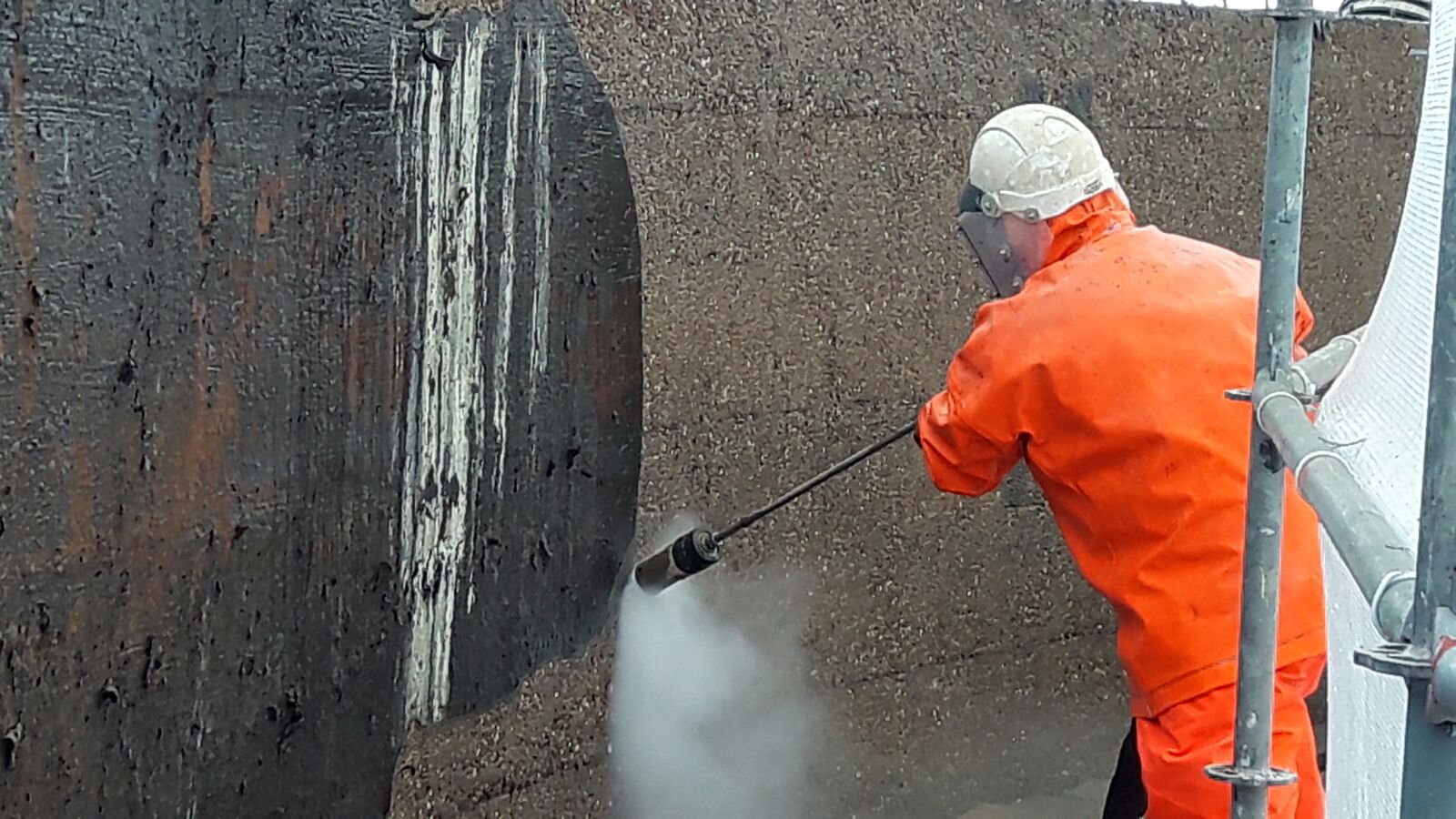
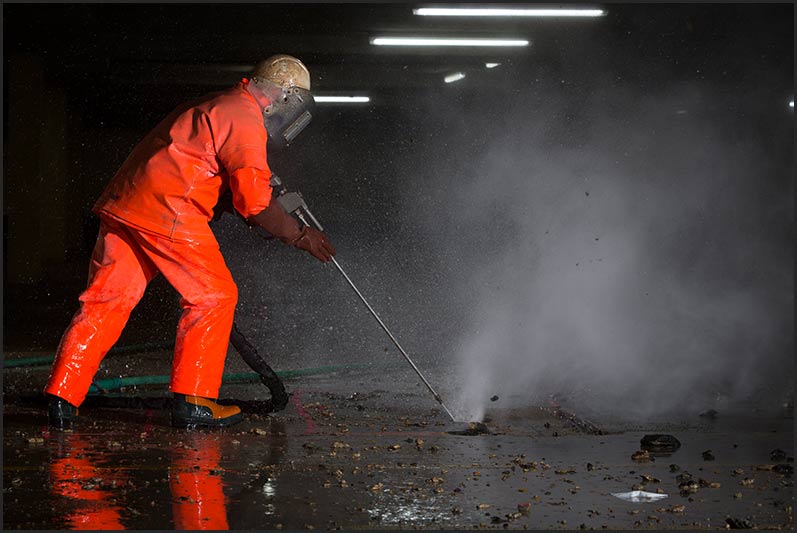
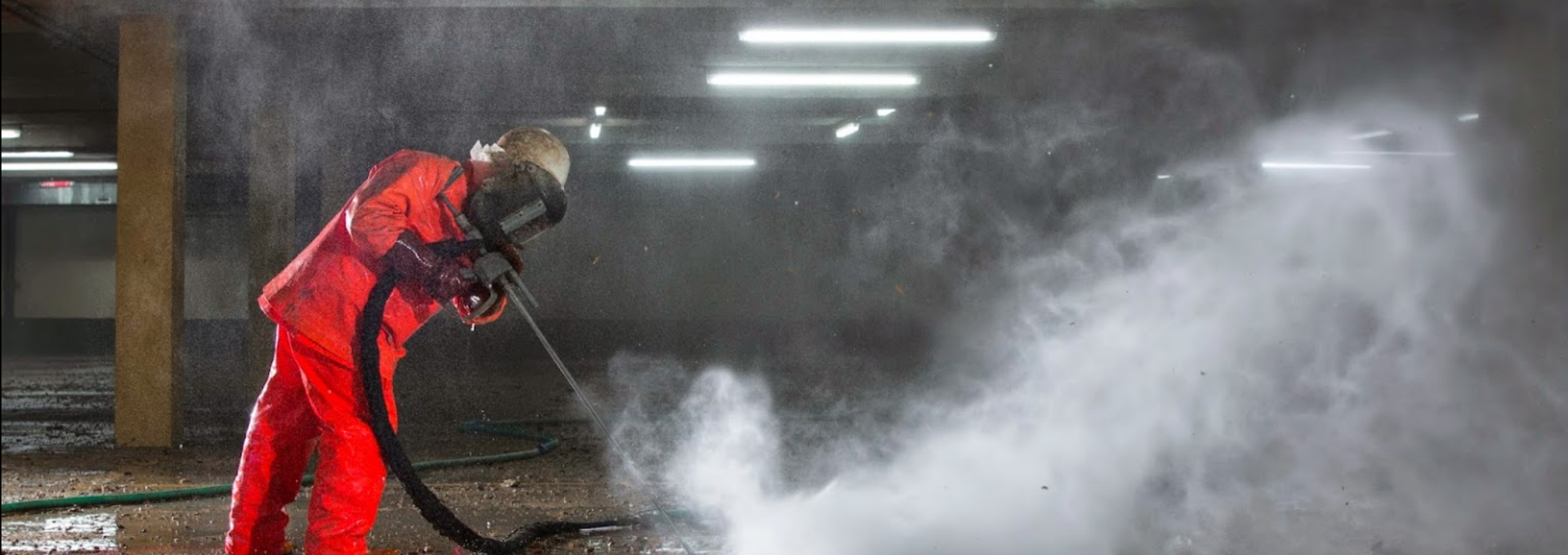
Water, oil, resin, sludge and hardened industrial products behave very differently. Some residues can be flushed relatively easily. Others adhere tightly to tank walls and may need high-pressure or ultra-high-pressure water jetting to break them down.
This is where our industrial tank cleaners will normally ask questions before recommending an approach. Useful information includes the previous tank contents, approximate residue thickness, tank dimensions, access points, internal linings and whether the material has hardened.
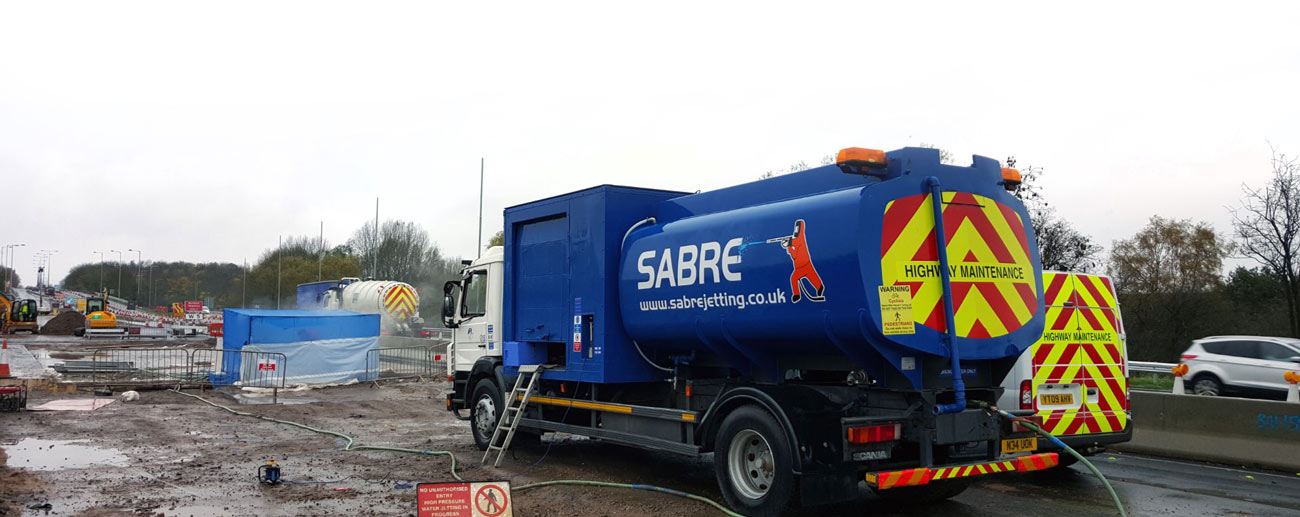
At Sabre Jetting, we use high-pressure water jetting equipment and specialist rotary nozzles for tank cleaning, including projects involving the removal of thick linings and hardened materials.
Why Should Access and Safety Be Considered Early?
Industrial tanks may meet the definition of a confined space, depending on their construction and the hazards present. Risks can include harmful fumes, reduced oxygen levels, fire, flooding or other hazardous substances. HSE guidance says confined-space work should be avoided where possible and carefully assessed when entry is necessary.
This means industrial tank cleaning needs more planning than simply arranging a cleaning crew. Isolation, ventilation, access, rescue arrangements and the nature of the tank contents may all need consideration.
For industrial tank cleaning, businesses should therefore look beyond the cleaning equipment itself and establish how the contractor will approach access, risk assessment and the specific conditions inside the vessel.
FAQs
How Often Should an Industrial Tank Be Cleaned?
The appropriate interval depends on what the tank contains, how quickly deposits accumulate and how the vessel is used. Inspection and previous cleaning records can help establish a sensible schedule.
What Are the Signs That a Tank Needs Cleaning?
Common signs include sediment build-up, reduced usable capacity, slow drainage, contamination between products and deposits becoming visible on internal surfaces.
Is It Better to Clean a Tank During a Shutdown?
Where practical, yes. Combining cleaning with planned maintenance can reduce disruption and give teams time to isolate the tank and coordinate any inspection or repair work.
Can High-Pressure Water Remove Hardened Tank Residue?
It can be suitable for many stubborn deposits and coatings. The pressure, nozzle and cleaning method need to be chosen according to the material and condition of the tank.
What Information Do Industrial Tank Cleaning Companies Need?
It helps to provide the tank dimensions, access arrangements, previous contents, type and approximate amount of residue, internal lining details and any planned inspection or maintenance work.